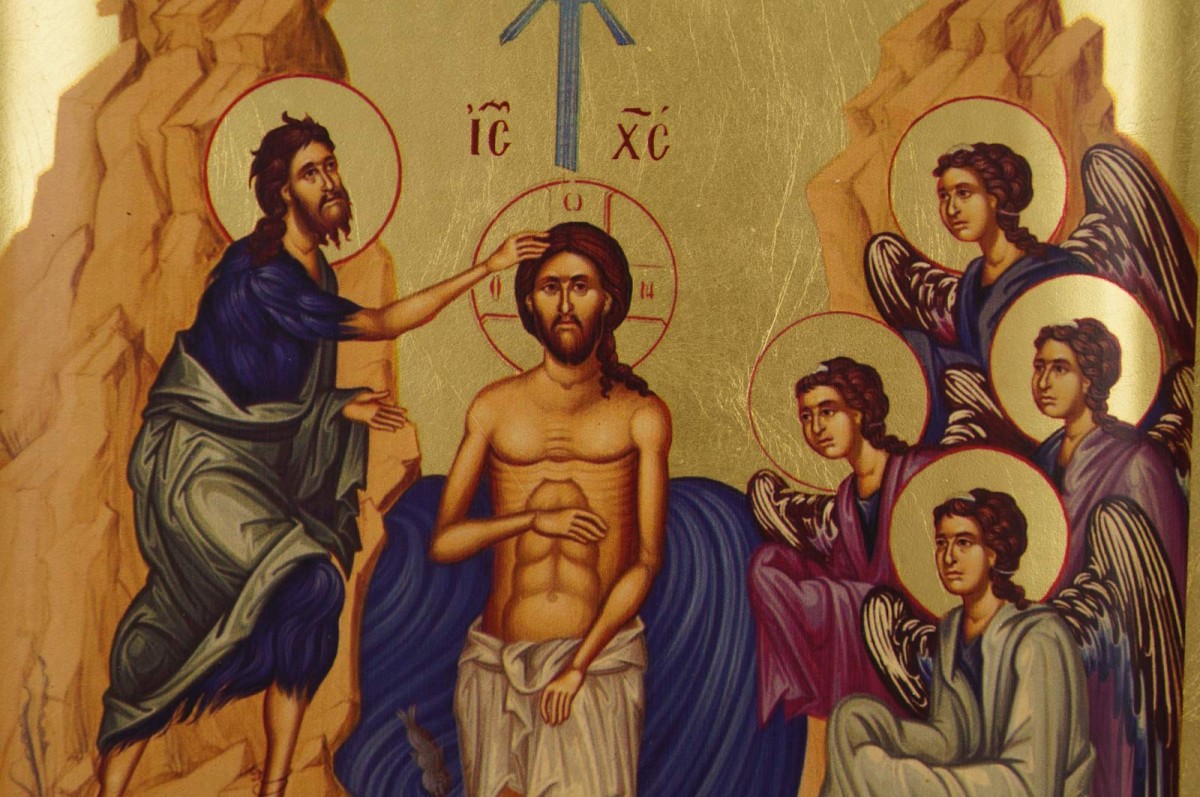
Theophany celebrates the baptism of our Lord and Savior Jesus Christ in the Jordan by the Baptist John. It is also called Epiphany, which means "revelation." It marks the beginning of Jesus's public ministry.
It is a feast older than even the Nativity of Christmas.
The Feast of the Epiphany was established as a solemn feast in the Eastern Church in the middle of the IV century as proclaimed in the Apostolic Constitutions: ” Let the Epiphany, in which the Lord manifested to us His own divinity, be to you the most honored festival and let it be celebrated on the sixth day of January.” (cf. Apostolic Constitutions V, 13) (The Feast of the Epiphany was established as a solemn feast in the Eastern Church in the middle of the IV century as proclaimed in the Apostolic Constitutions: ” Let the Epiphany, in which the Lord manifested to us His own divinity, be to you the most honored festival and let it be celebrated on the sixth day of January.” (cf. Apostolic Constitutions V, 13) (https://archpitt.org/the-byzantine-rite-celebration-of-the-feast-of-the-epiphany-of-our-lord-with-the-traditional-blessing-of-the-water-and-the-blessing-of-homes/)
Water is blessed either at the Vesperal Liturgy on January 5 (or for parochial reasons at Divine Liturgy on January 6).
Following Theophany, the priest schedules home blessings with the parishoners. There is both a spiritual and pastoral significance to this tradtion: to invoke God's blessing on the house for the upcoming year, and to give the priest a chance to meet with the household about how their needs for the upcoming year. (https://parma.org/our-traditions)